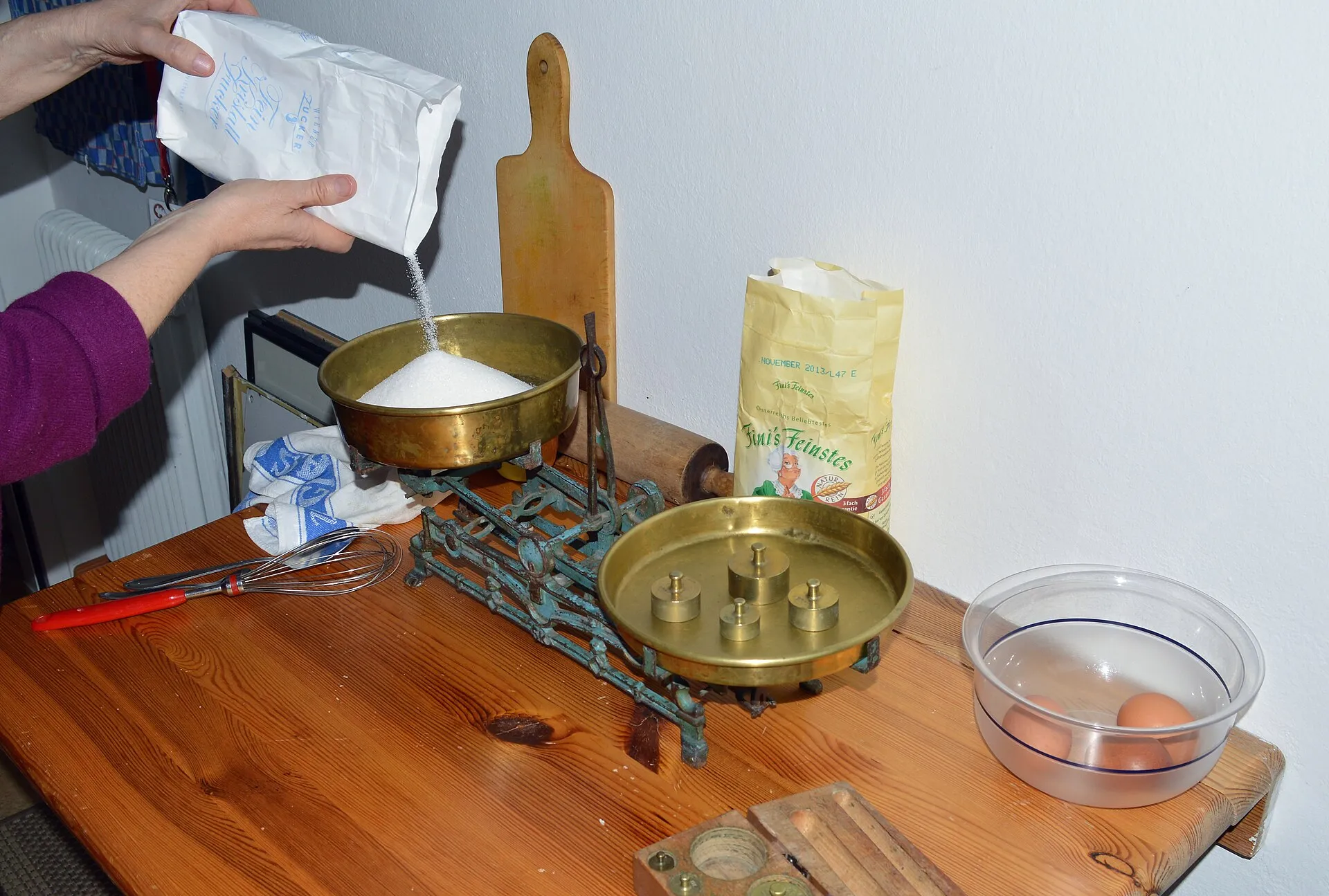
Every kitchen eventually hosts the same standoff: a recipe written in grams meeting a scale that speaks ounces, or the other way around, with somebody holding a block of chocolate and no official weight for it. Neither unit is leaving. The ounce has seniority in three countries and the gram has everything else.
The whole conversion is one number: an ounce is 28.35 grams. So 100 g is about 3.5 oz, a pound is 454 g, and that bag of flour marked 500 g is 17.6 ounces — the “1.1 lb” the shelf sticker quietly admits to. The rough version people actually use: divide grams by 30. Close enough for soups and cheese boards; wrong by a gram here and there, which is exactly the amount baking notices.
The part that trips everyone isn’t the math, it’s the word. An ounce of weight and a fluid ounce of volume are different things wearing the same name — one weighs, the other pours. That’s why a recipe that measures flour in ounces can’t be trusted with “fluid ounces” of milk without a lawyer present. Meanwhile the butter wrapper keeps doing the conversion for you: one US stick is 113 grams, 4 ounces, a quarter pound, printed right there in three languages like a tiny peace treaty.
A few numbers worth keeping in your pocket: a 28-gram snack bag is one ounce, the portion size the whole snack industry runs on. A quarter-pound burger is 113 grams before it meets the grill. And 250 grams of anything is about 9 ounces, which is the amount of chocolate that officially counts as “for the recipe”.
When the recipe and the scale won’t share a language, the grams to ounces converter settles it instantly, and the ounces to grams version handles the argument going the other way. For bigger jumps — a 5-pound bag, a 2-kilo order — the grams to pounds and pounds to grams pairs carry the heavy boxes.
And if you’d rather see everything at once, the weight converter takes one number and answers in grams, ounces, pounds, stones and the rest of the drawer simultaneously. Less translating, more baking. The scale doesn’t care what language the label is in — it just wants to be believed.
Hero photo: Wald1siedel, CC BY-SA 3.0, via Wikimedia Commons.